Grant Robinson
Titanicus
by Dan Abnett
Do you like reading multiple paragraphs describing a single scene? Dizzyingly hopping between a laundry list of characters and perspectives that you have to keep track of? Then Titanicus is the book for you!
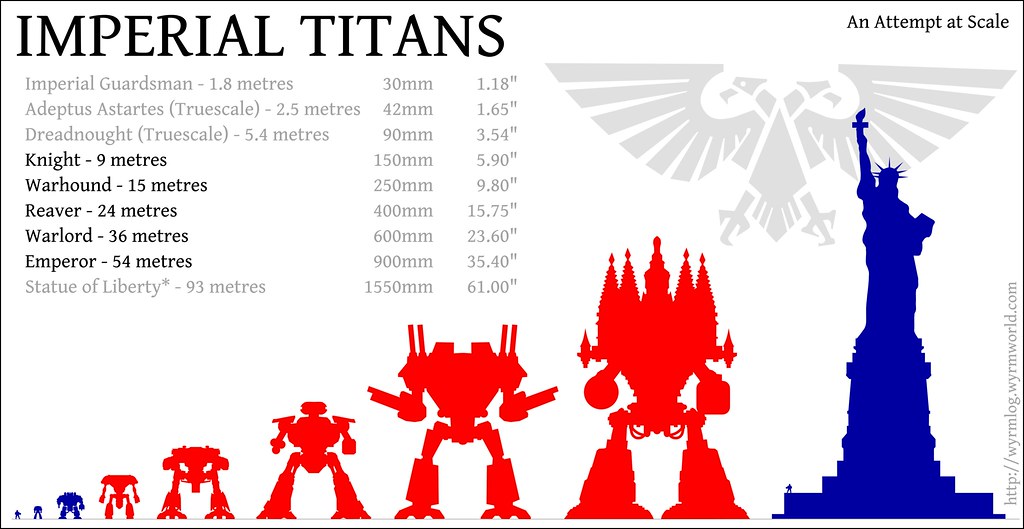
To briefly summarize up to the page I have read to, page 197 out of 602, the story takes place on the forge world Orestes. A forge world is essentially a planet whose sole purpose is to produce weapons, ships, commodities, Titans, and anything else a factory can produce. Orestes is home to two factions, the God Empire of Man, also known as humans, and the Mechanicus, cyborgs that most of whom have been cybernetically modified so far from the original human form that they can speak in binary code out loud amongst each other almost as a whole other language via augmentations to their voicebox and fail to pick up on common human social cues. Although the two are allied together, there is tension between them; the humans are distrustful of the alien nature of the Mechanicus, and the Mechanicus fear the humans may attempt to limit their freedoms because of how different they are. However, Orestes is attacked by the Chaos Legion, a rogue group of heretics from the God Empire who have been corrupted by the Warp, which is basically space Hell, and its Chaos Gods. The Chaos Legion is sieging the planet to take it for themselves with Chaos Marines and massive mechs, called Titans, that they stole from the God Empire. A Titan is pretty much impervious to all weaponry and cannot be taken down unless they are faced with another Titan, but unfortunately for the God Empire, Orestes’ Titans, called the Legio Tempetsus, have all been shipped off or destroyed. Because of these desperate times, the Legio Invicta, a legion of veteran Titans, were called in to deal with this threat. Now, this seems like a pretty lengthy summary especially since I have only read 197 pages, but this is the abridged version! The book moves at a very slow pace despite filling every page with relatively small font, and thus I haven’t even been given enough time to introduce you to any characters. But in the interest of keeping this review from being three pages long, I’m just going to tell you my thoughts on the book.
I don’t really know where to place this book as it’s nothing like I’ve read before. Despite being recommended as a good beginner’s jump into the universe of Warhammer 40k, a series which I haven’t read before, the book doesn’t use typical character archetypes, nor is it structured normally. Instead of a three-act/hero’s journey type of narrative structure, Titanicus instead opts to jump from perspective to perspective, including but not limited to the following: bureaucratic bickering from ultra-rich aristocrats, infantry grunts hopelessly fighting giant mechs, and even a toymaker describing a new figurine he created. Some of these characters are revisited which in turn drives the overall plot, but many are either not mentioned again, or die at the end of their chapter. While it is a novel idea, the frequency in which Abnett swaps between these characters and their relevance (or lack thereof) to the overall plot made me question the purpose of a good amount of these different perspectives. Additionally, some perspectives take place at vastly different times than others, meaning that you’ll be bounced around a confusing timeline without knowing exactly where you are in the story until halfway through a chapter. Want an example? When describing a character Abnett stretches it out as far as he can, such as “Manfred Zember was the third-generation proprietor of the little emporium... little clockwork Titans”(28-30). Here, an irrelevant toymaker has the entire history of his shop, his accomplishments in creating and fixing toys, and the specific creation of how he made a certain toy told to you across 3 pages. The chapter before this scene? It was talking about a janitor sweeping the floors of a courtyard and thinking about the pretty bushes and his service pension for four pages straight; I’m not joking. Now that I think about it, I’m struggling to figure out what to call these “chapters;" there are no titles, numbers, or table of contents, just a little > symbol to indicate the chapter is over. These “chapters” can vary from a few pages of fluff to a lengthy, emotional piece. Occasionally Abnett actually does put down a roman numeral to indicate that chapter III has begun, but the places where he puts these don’t seem to flow naturally, and I feel in certain spots he’d be better off putting that number down a few pages ahead or before.
Despite the aforementioned tedium, I still appreciate the premise of the book. You have giants mechs fighting each other, a sprawling and detailed futuristic world that’s just a speck inside the larger Warhammer universe, and likable and realistic characters. The insignificance of some characters in comparison to the scale of everything else is a really interesting dynamic. Although the detail can be excessive at times, it allows for easy visualization of what’s going on inside of a scene, leaving almost nothing up to the imagination. For example, “The wet air clung to the petrochemical stink of their exhausts. The low sky was a deep, hot brown, and amber vapour draped across the broken landscape”(62) and “The Invicta skitarii, a throwback to more savage times, were fearsome beasts, striped and extravagantly marked, their armour built for threat, their genes selected for bulk”(102). This level of detail, while excessive at times, shows a great level of care.
Thus, I would personally only recommend this book to people with a lot of patience and a wide vocabulary, as the book tends to use rarely heard words with some latin sprinkled in there. The slow pace and lack of focus on the characters may bug some readers, but the book makes a point to show readers the world of Warhammer 40k, and chooses to focus on immersion and grit instead of overly complex characters who are just tiny cogs in a bigger machine.
Comments
Post a Comment